
“Ever since I learned to open my heart and let things ‘fall through the cracks,’ just like the Ainu woven bag—to give freely, let go of excessive desires, and appreciate life’s little blessings—I’ve found myself feeling happier, lighter, and more at peace with each passing day.”
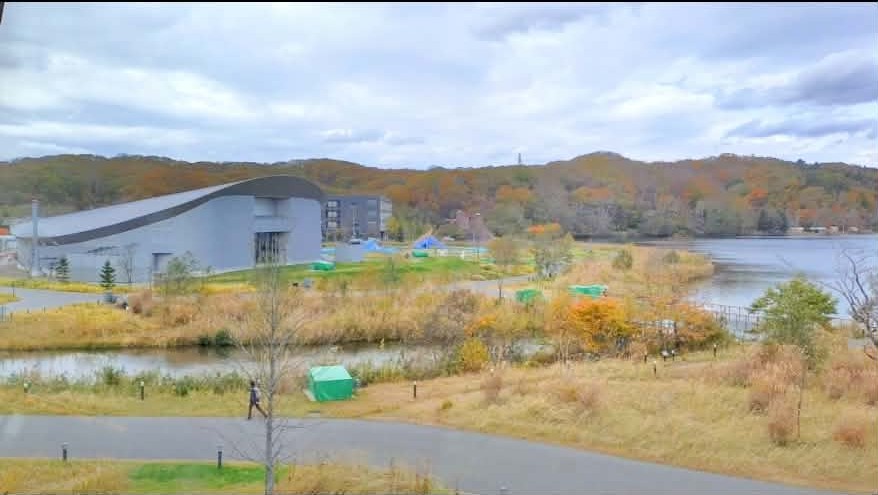
A cloudy day at Upopoy
“Travel broadens the mind.”
Some journeys simply offer beautiful scenery, while others quietly change the way we see the world. Shiraoi, a peaceful little town in Hokkaido, is one of those places that has left a lasting impression on me.
What makes this town so special is its unique blend of cultures: the familiar charm of modern Japan, the openness and diversity of its international community, and the rich, distinctive heritage of the Ainu people.
🌿 Shiraoi: A Gateway Between the Familiar and the Unknown
Before visiting Shiraoi, my image of Japan was shaped by its familiar icons: the dazzling energy of its cities, the spirit of the samurai, the art of Kabuki, and the delicate precision of ikebana. But when I arrived in Shiraoi, I felt as though I had stepped through a doorway into an entirely different world.
Before me stretched a magnificent natural landscape, where vast forests run alongside a coastline alive with the sound of crashing waves. Each season—spring, summer, fall, and winter—transforms the scenery into something uniquely beautiful.
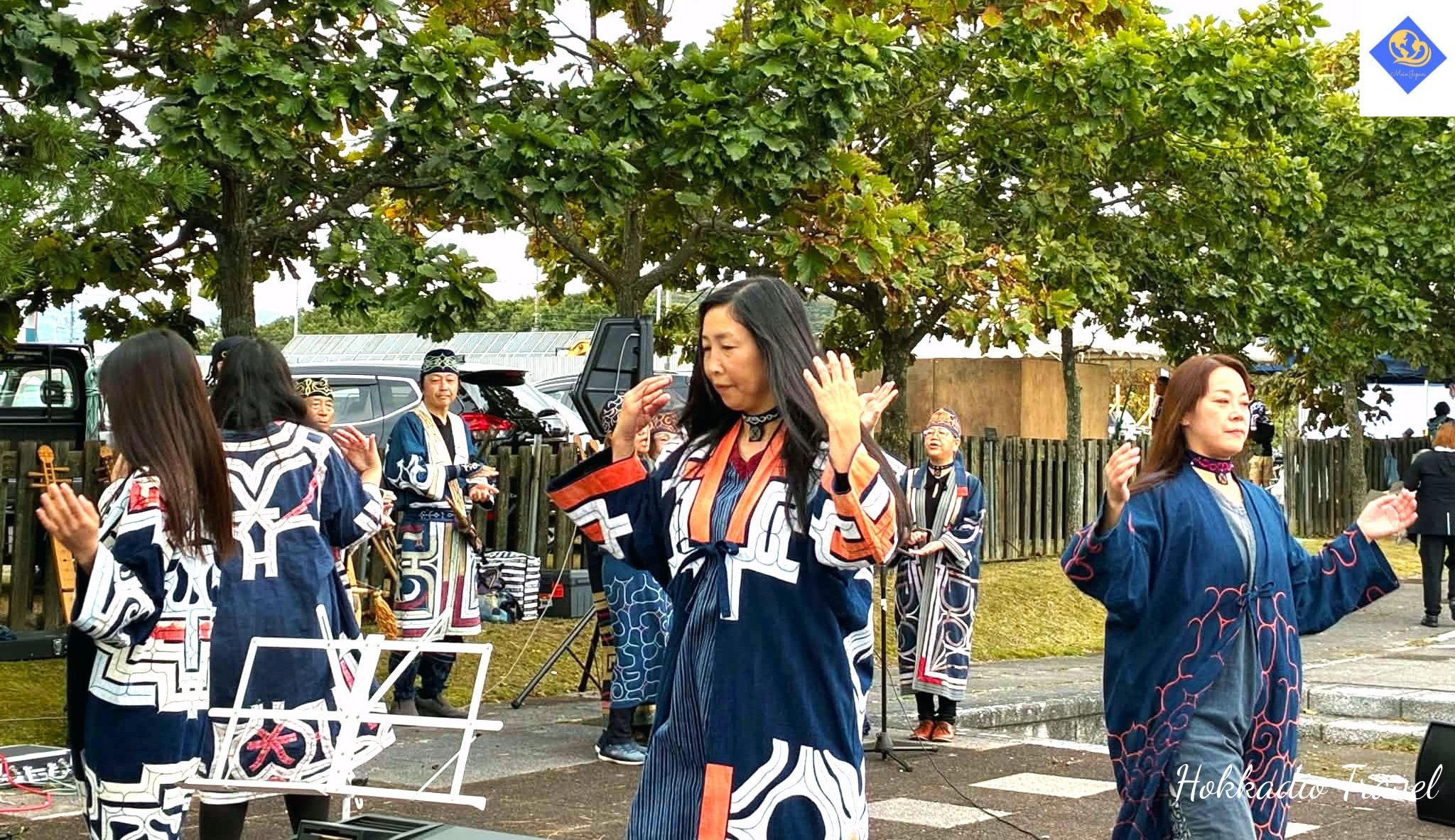
Flowing through this landscape is the living culture of the Ainu, carefully preserved and passed down through generations. From the graceful, symmetrical spiral embroidery on traditional garments to dances inspired by the natural world, every detail carries a sense of mystery, beauty, and deep cultural significance.
Today, Ainu people are part of modern Japanese society. They dress, work, and go about their daily lives much like anyone else in Japan. Yet in Shiraoi, during important traditional celebrations such as Chep Sai, a festival expressing gratitude to the deities, and other special ceremonial occasions, Ainu people and cultural practitioners still wear vibrant traditional clothing, perform ancestral dances, and carry out sacred rituals.
To make this remarkable heritage accessible to visitors and anyone interested in learning about Ainu culture, it is carefully preserved, shared, and brought to life at Upopoy (National Ainu Museum and Park).
This experience helped me understand something profound: culture is not simply something brought out for festivals or special occasions. It is also a quiet, enduring spirit that continues to flow beneath the surface of everyday life.
🌿 The Story of the Leaky Woven Bag and the Ainu Philosophy Behind It
During one visit to Upopoy, I had the opportunity to hear a local guide share a story about a grass-woven bag displayed in the exhibition. It was a simple story, but one that touched my heart and has stayed with me ever since.
In the past, the Ainu traditionally relied on hunting, fishing, and gathering for their livelihoods. They made everyday tools and household items using materials readily available in the natural environment. The bag with its many openings was one such item. Ainu women used these bags when gathering wild vegetables, berries, and other plants in the forests during spring, summer, and fall.
But why would they use a bag with so many holes in it?
The guide explained that the Ainu placed great importance on living in harmony with nature. Whenever they gathered something from the natural world, they took only what they needed, doing so with gratitude and respect.
As they placed the fruits and seeds they had gathered into the bag, some would naturally slip through its openings and fall back onto the forest floor. In time, new plants would grow from those seeds, flowering and bearing fruit again the following year. In this way, the forest could continue providing food for both people and wildlife for generations to come.
🌿 A Lesson in Knowing When Enough Is Enough in the Modern World
The image of that open-weave bag, brought to life through the guide’s story, felt like a refreshing wake-up call.
In today’s modern society, we seem almost programmed to pursue perfection, security, and accumulation. We want to collect more, hold on tighter, and constantly worry about losing what we have.
The Ainu, however, embraced a different way of living. They allowed some of what they gathered to return to Mother Earth—not because they had more than enough, but because they understood the natural cycle of renewal and the importance of sustainability.
Allowing seeds to fall back onto the forest floor was more than an ecological practice. It reflected a profound trust in the future and in nature’s ability to provide:
When we don’t take more than nature can give, nature will continue to provide for us.
The story of the bag taught me a lesson that I still carry with me and try to put into practice every day:
Live with a sense of enough. Take only what you truly need, and receive it with deep gratitude and appreciation.
Ever since I learned to open my heart and let things “fall through the cracks,” just like the Ainu bag—to give freely, let go of excessive desires, and appreciate life’s little blessings—I’ve found myself feeling happier, lighter, and more at peace with each passing day.
If you ever find yourself in Hokkaido, don’t rush past its bustling cities without exploring the quieter places in between. Take a day to slow down in Shiraoi and visit Upopoy. See that grass-woven bag with your own eyes, listen to the rhythm of the ocean waves, and breathe in the spirit of the ancient forests. Here, Ainu culture continues to whisper an age-old lesson about love, gratitude, and living in harmony with all forms of life.